Introducing the Cascade Agent Harness: governed AI for every IT and HR request. Read the announcement →

How Agents Are Rewiring the Enterprise Stack

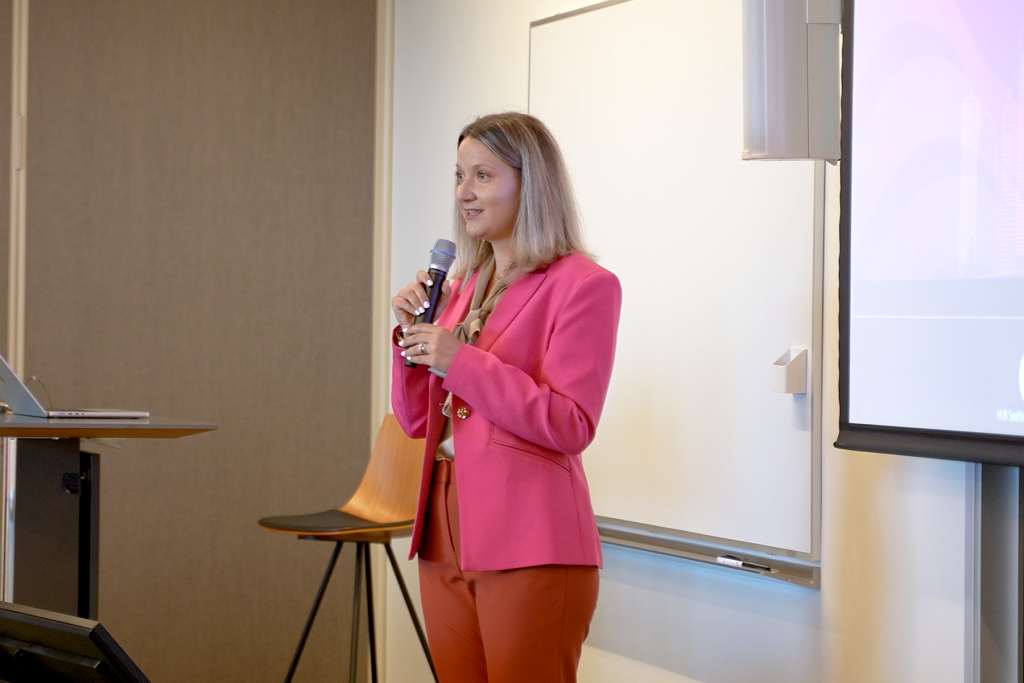
A look at how Microsoft sees the enterprise AI stack evolving — from Copilot as a single UI, to the intelligence layer, to the agentic ecosystem where startups like Cascade plug in.

Share

Companies are investing billions and billions of dollars into AI. How many are using it at scale wall to wall? A lot less. And that’s the paradox that we find ourselves in.” 
Tom Davis
GM & Partner, Microsoft for Startups

Key Takeaways

The Innovation-Deployment Gap

Companies are investing billions in AI, yet almost none have deployed it at true enterprise scale. When Tom asked the audience who had deployed AI wall-to-wall, only two or three hands went up — highlighting the enormous gap between investment and real-world implementation. 
75% Buy vs. Build — The Enterprise Buying Pattern Has Flipped

A recent study found that 75% of enterprise technology decisions now favor buying over building in-house. This represents a dramatic reversal from historical patterns, driven by the speed of AI innovation and the rise of specialized, best-in-class solutions from startups. 
Microsoft’s Three-Layer AI Stack 

Microsoft’s enterprise AI architecture consists of three layers: the Copilot user interface that eliminates context-switching, the IQ intelligence layer powered by Microsoft Graph and Fabric, and the agentic layer where specialized third-party agents like Cascade plug in. This modular design lets enterprises assemble the best tools for each function. 
“Fantasy Football” for Agents

Tom compared the emerging agentic ecosystem to fantasy football: enterprises can now draft the best agent for each specific job rather than relying on a single monolithic platform. Every startup founder is a subject matter expert, and their focused, purpose-built agents outperform generalist solutions.  
Startups as Subject Matter Experts 

Microsoft for Startups scouts roughly 40,000 startups but curates only a few hundred for enterprise customers based on readiness, trustworthiness, and problem fit. The reason startups matter is that their founders live and breathe a single problem every day, producing solutions that large platform players simply cannot match. 
Innovation Is Existential 

Tom closed with a clear warning: AI innovation is no longer optional for enterprises. The speed of change makes inaction the riskiest strategy. Microsoft uses the McKinsey Three Horizon Framework to help enterprises plan across immediate, medium-term, and long-range innovation horizons. 
Speaker
Tom Davis
GM & Partner
Microsoft for Startups

Helps founders go from idea to scale at Microsoft for Startups — shaped by founding and exiting two companies, and driven by a commitment to outcomes, diversity, and decisive teams.

Deep Dive

Related Content

Opening Remarks

Welcome, objectives, and framing for the day — why the gap between AI experimentation and AI at scale is closing fast.
AI Transformation as a CEO Mandate

Drawing on 30+ years of C-level experience and a sweeping AI transformation at Xerox, Steve made the case that AI strategy must be owned at the top — and that the companies seeing real results are moving fast, failing fast, and treating agents as a digital workforce.

Agentic Workflow Automation for IT, HR, and Shared Services Operations 

GDPR
Compliant

SOC2 Type II
Certified

ISO 42001
Certified

HIPAA
Compliant

CCPA
Compliant

Subscribe to the Cascade AI Newsletter for company and product news, original research and reports, and industry insights into shared services.

Scroll to Top