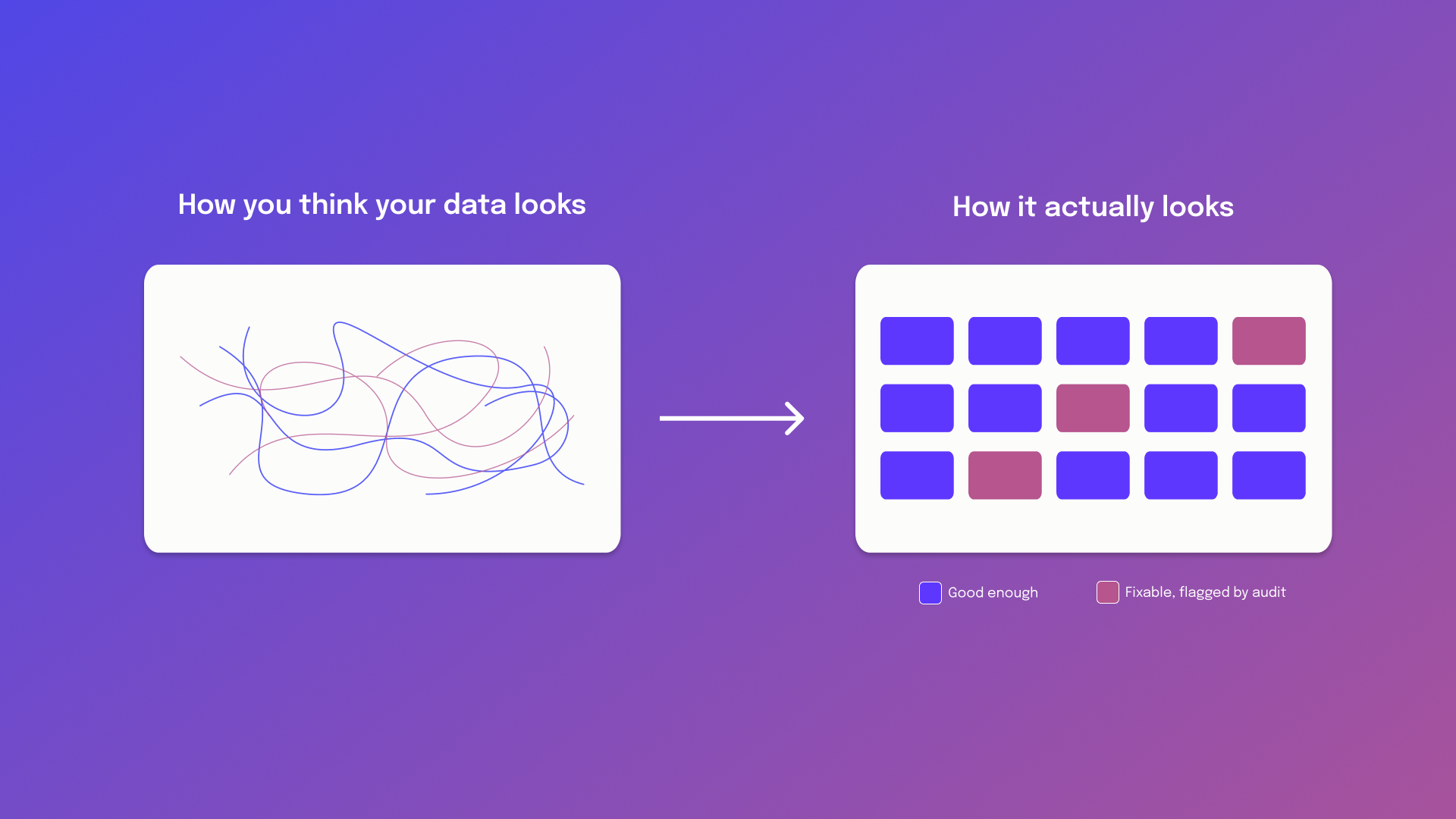
The biggest barrier to AI adoption isn’t messy data. It’s assuming your data is worse than it actually is.
One objection comes up in nearly every conversation we have with enterprise leaders. “We’d love to deploy AI, but our data is a mess.” Sometimes it’s “spaghetti,” sometimes it’s “held together with duct tape,” and sometimes it’s simply “we’re not ready.” After dozens of enterprise deployments, we’ve found something surprising: they’re almost always underestimating how ready they actually are.
The data perception is usually worse than the reality
Every organization has anecdotal stories about bad data. A report that pulled the wrong information, an outdated policy buried in SharePoint, three different versions of the same benefits document. Those experiences create a lasting assumption that if the data has issues, AI won’t work.
But there’s an important distinction between imperfect and unusable.
While most organizations have some outdated content, duplicate documents, or knowledge gaps, very few have data so broken that they can’t successfully deploy AI. In our experience, most companies are much closer to “ready” than they realize.
One of the biggest misconceptions is that your knowledge base has to be perfect before AI can deliver value. In reality, AI accelerates the cleanup itself.
Using AI to prepare for AI: What a data audit actually uncovers
Every Cascade implementation begins with a structured AI data audit. We don’t ask customers to disappear for six months and clean everything up before we start. Instead, in weeks, we identify exactly what matters: which policies are outdated, where documents conflict with each other, what topics employees are asking about that aren’t well documented, and where minor inconsistencies exist between systems.
These are real issues, but they’re targeted, understandable, and fixable. Instead of hearing “your data needs work,” customers receive a clear roadmap of exactly what needs attention.
That’s a very different problem to solve than the vague dread most teams carry around. And AI doesn’t just identify the issues, it helps solve them too.
AI helps clean your data and keeps a human in the loop
For each issue the audit surfaces, our AI-powered knowledge base suggests a fix: reconciling conflicting documents, drafting updates for outdated policies, and proposing new content for the topics employees ask about most. Rather than manually reviewing thousands of documents, HR teams focus only on the small number of decisions that actually require human judgment. The result is a faster implementation and a better knowledge base than you started with.
Continuous, automated cleaning
Another worry we hear is that data cleanup becomes an ongoing burden. It shouldn’t.
The audit and cleanup aren’t a one-time project you’ll have to repeat. As your organization evolves and adds new policies, new tools, or receives new types of questions from employees, the AI keeps monitoring your knowledge base and flags issues as they appear, before they pile up. Instead of periodically starting over, you’re continuously improving. The knowledge base gets healthier over time, not messier.
Don’t let a false assumption slow you down
The biggest obstacle to AI adoption often isn’t technology, integrations, or your data. It’s the assumption that your organization has to be perfect before you begin. In our experience, that’s not true. The fastest way to find out whether you’re ready isn’t to spend months guessing. It’s to take an honest look at what you already have. Chances are, your data is both clean enough and complete enough to get started with an AI deployment.