Introducing the Cascade Agent Harness: governed AI for every IT and HR request. Read the announcement →

AI and the Future of Work

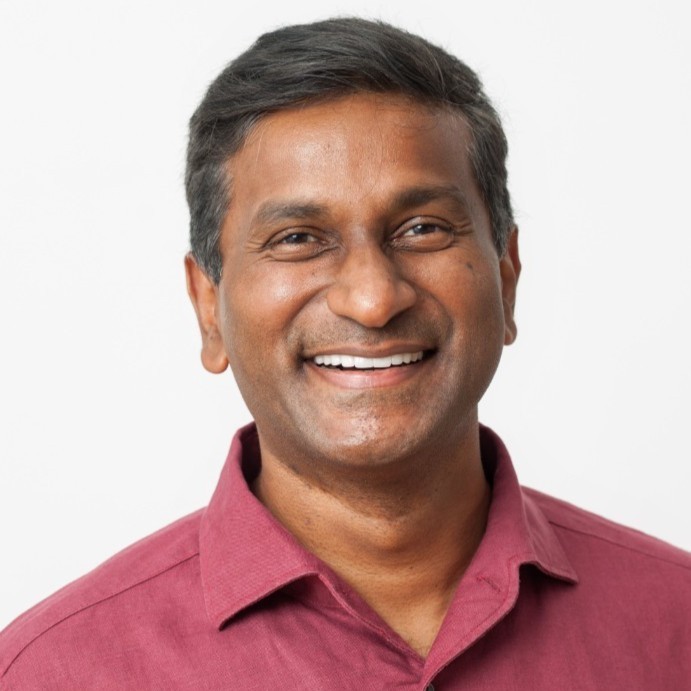
Drawing on 15 years at Google and his current focus at Stanford on Future of Work, Prasad explored how AI is reshaping org design, management, career pathways, and what it means to develop talent when machines can do the transactional work that used to build judgment.

Share
Today, people talk about the 100x person. It’s no longer 10x. There are people who can create 100x impact. There are others who are maybe doubling impact. But compared to the 100x person, they’re nowhere close. So the variance of performance increases significantly.”
Prasad Setty
Former VP, People Operations & Analytics, Google
OpenAI Advisor
Stanford GSB LecturerI

Key Takeaways

Pre-2022 History as Liability

Organizations built before the rise of ChatGPT in 2022 may find their existing structures, assumptions, and processes actively working against them in the AI era. This framing is empowering for AI-native startups but poses an existential question for established companies: how much of what was taken for granted about work, org design, and careers still holds?  
Three Transformation Models: Future-Back, Standards-Led, and Adaptation-Led

Prasad outlined three distinct approaches companies are taking to AI transformation. Block (formerly Square) pursues a “future-back” model, envisioning an intelligent organization with only three human roles and AI handling information routing. Zapier takes a “standards-led” approach with a rigorous AI Fluency Model where Level 0 (chat-only use) is deemed unacceptable. Airbnb follows an “adaptation-led” path, experimenting broadly while embedding organizational architects who think about both workflows and technology.
The Workflow 2×2: Mapping Human Involvement Against Task Verifiability

A practical framework for workflow redesign uses two axes: human in/out of the loop, and verifiable versus high-judgment tasks. Verifiable tasks with humans in the loop represent “bad friction” to eliminate. High-judgment tasks with human involvement represent “good friction” to preserve. The danger zone is automating high-judgment tasks without human oversight, which leads to organizational capability loss over time. 
Unbundling the Manager Role: The Rise of the Judgment Architect

Manager span of control has remained roughly six direct reports since the Roman army and Ian Hamilton’s 1921 observation that “the average human brain finds its effective scope in managing three to six other brains.” AI may finally change this by unbundling traditional manager functions—information routing, coordination, resource allocation, quality judgment—across AI systems and specialized roles like player-coaches and DRIs. The new manager becomes a “judgment architect” focused on developing people’s decision-making capabilities.
From 10x Engineer to 100x Contributor: Performance Variance Is Widening

The old Silicon Valley notion of the “10x engineer” is giving way to the “100x contributor” as AI amplifies individual impact. Performance distributions are widening significantly, and organizations that fail to identify, reward, and retain top performers risk losing them to environments where their disproportionate output is recognized. Companies like Block and Coinbase are already creating “Super IC” roles for individuals with outsized impact via AI agents. 
Junior Development Pathways Are Breaking

Early-career roles historically built judgment through transactional work that AI is now absorbing. Meanwhile, AI-polished resumes and performance packets are stripping signal from hiring and review processes—Sierra had to completely redesign its hiring process after applications became indistinguishable. Organizations must give early-career employees tasks with real consequences, evaluate thinking rather than artifacts, and redesign development pathways before the judgment pipeline runs dry.  
SpeakerS
Prasad Setty
Former VP, People Operations & Analytics, Google
OpenAI Advisor
Stanford GSB Lecturer

Built the people analytics function at Google and is now an industry luminary and advisor to multiple companies at the intersection of talent, technology, and the future of work.

Deep Dive

Related Content

Opening Remarks

Welcome, objectives, and framing for the day — why the gap between AI experimentation and AI at scale is closing fast.
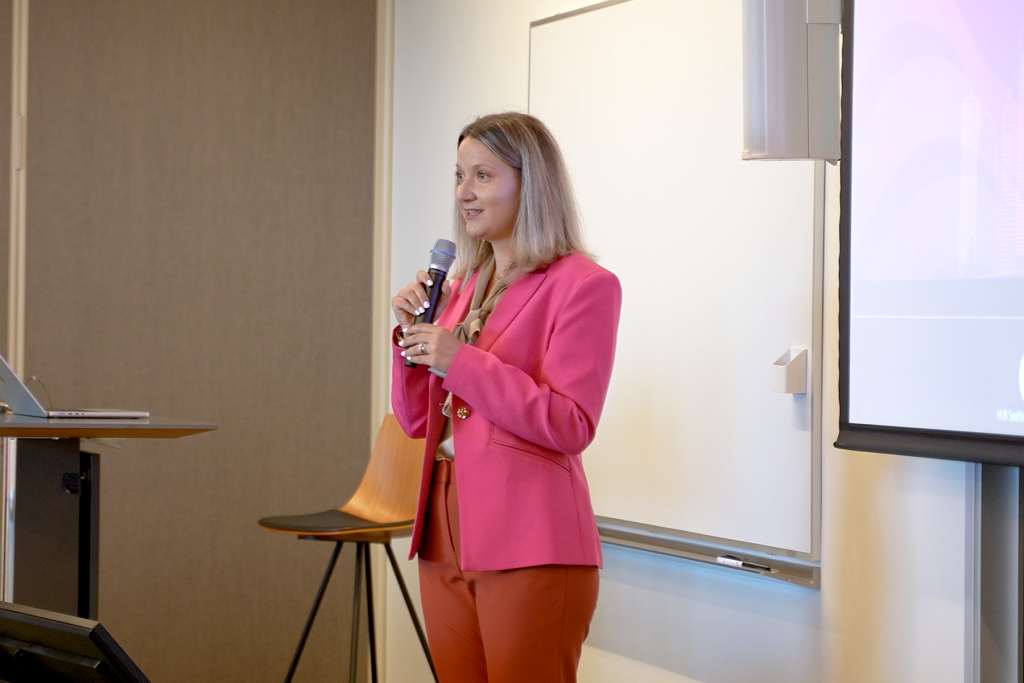
How Agents Are Rewiring the Enterprise Stack

A look at how Microsoft sees the enterprise AI stack evolving — from Copilot as a single UI, to the intelligence layer, to the agentic ecosystem where startups like Cascade plug in.

AI Transformation as a CEO Mandate

Drawing on 30+ years of C-level experience and a sweeping AI transformation at Xerox, Steve made the case that AI strategy must be owned at the top — and that the companies seeing real results are moving fast, failing fast, and treating agents as a digital workforce.

Agentic Workflow Automation for IT, HR, and Shared Services Operations 

GDPR
Compliant

SOC2 Type II
Certified

ISO 42001
Certified

HIPAA
Compliant

CCPA
Compliant

Subscribe to the Cascade AI Newsletter for company and product news, original research and reports, and industry insights into shared services.

Scroll to Top